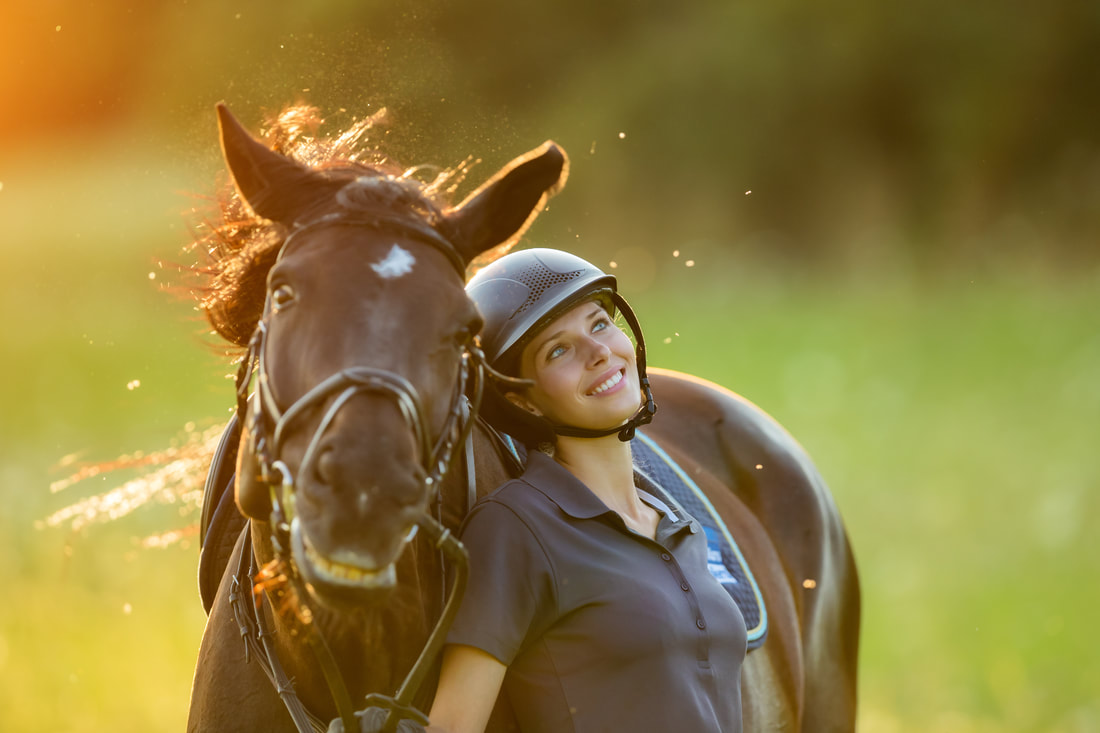
Inside the Mind of the Jumper Rider

By April Clay, Psychologist

Have you ever wondered what goes on in the mind of an experienced jumper rider? How do they think about their job, how do they manage all the challenges? I spoke with three exceptional riders: former World Championship winner Gail Greenough, often Canadian team member John Anderson, and Deanna Phelan, an increasing force in the Eastern Canadian jumper circuit.

All these riders have different process to direct their mental game, and as you read and review you will see their own style become evident. As a sport psychologist these interviews confirmed the truths I have come to experience about mental training: your mind impacts your performance whether you want it to or not, mental training changes and evolves with you, and ultimately it’s a personal journey that never ends.

What portion of riding success do you think is owed to mental skills and why?
Gail: I don’t know if you can really put a percentage on it, but you do need mental capacity, without it you are not a competitor. I think it’s been everything for me, so I would at least put a 50/50 value on it.

John: At least 70% mental, it’s like the game of golf. It’s a head game, here you have this living breathing animal that might not want what you want, you have to sense all that and find a way to deal with it.

Deanna: As you get older your perspective changes, attitude is very important. Perseverance has kept me going and now I am getting better, I can compete with top riders and feel like I belong there. Wisdom as well as perspective are important, know that there are ups and downs even for Ian Millar. All kinds of stars out there have had ups and downs. No one told me I couldn’t belong so I kept on going.

What mental challenges face jumper riders in particular?
Gail: Fear of failure, and of success. I see this with my students, some trying too hard -(fear of failure) they go around the ring well and then panic because they’re almost clean.

John: I think it’s the animal element. Then there are the courses too, some riders have issues with triples or water or grobs or past experiences. I was sure scared of some things when I was a kid; there were all kinds of pressure. But by experiencing some success, my confidence went up and as I got older I learned to deal with things much better.

Deanna: It’s not like other sports, where someone snaps you up and says I’ll take you all the way if you have talent. Everyone has that question in their heads sometimes (do I belong?). There is also the challenge of staying educated to the new demands. Take lots of lessons, try to become a better horse person right down to the shoeing.

What skills do you try to develop at home in training to take to the ring?
Gail: Within every exercise I set I think about what I want to achieve. I also worked with a sport psychologist through the Canadian team and developed skills I still use. Things like choosing a tree or other object at a show and touching it while thinking of transmitting all my nervous energy to it.

John: Every rider is different in terms of what their needs are. For me now its patience. Not asking too much of the horse, like with distances- just waiting and things will show up.

Deanna: I make goals, have slogans on my fridge, so I can walk by and remember to believe. Again, you have to stay self motivated. Have long and short term goals that are realistic and have your dream goals too of course. Trying to be comfortable, and being in the ring as much as I can helps this, helps with being anxious, staying positive because you sometimes have more bad days than good days in this sport, and you have to find a way to stay committed.

How do you prepare yourself mentally and emotionally for big class?
Gail: I think about my task at hand, and focus on my job to the exclusion of all else.

John: I consider things like eating properly, being well rested and keeping my mind slow. I try to just think about my ride and visualize. And you have to tune out all the noise- there is so much sometimes, in the staff, announcers and parades and that can all distract you. Breathe and focus on the job at hand.

Deanna: Every class is important to me. Every time it’s big. One is, know when everything is happening, be prepared and be comfortable with my warm up. Ride to my plan, not think of other things.

What was the point in your career where your confidence as at its lowest? How did you come back from this?
Gail: There have been so many, this sport is full of ups and downs. It’s all about going back to the job again. Even after I won the World Championships, I still had to get back to business as usual.

John: There was a point in 89 or 90, after the Olympics, where I stopped riding. I had finished university; there were family distractions and a lot going on. I quit for five years and then realized I missed it so I came back and took one of our more experienced horses out. We won a big class, and I realized I had to build back up my mounts, get some new ones. If you have a good horse that can really help you, and can also help you ride others of lesser quality better. I also had to set new goals for myself.

Deanna: I bought a new horse, a European horse in 2000, and he was a huge change from riding my usual thoroughbreds. I struggled in this partnership for a good year and spent a lot of money. Finally, I had to admit it was not working, realized that I can ride but maybe not this kind of horse, so I stopped and gave the horse up. I found a more suitable one and started again. I see lots of people hanging on like I did, and this was a very important lesson for me, learning to let go. Then it all came together this fall, if I had died after what I accomplished at the Royal, I sure would have died happy!

How do you deal with errors? What kind of errors are you most prone to?
Gail: I try to learn from my mistakes and move on. There is always a window for learning. Get to the next one, to the best of my ability is what I do. I like to think if you do right by the horse, you will never go wrong; you will always do the right thing for yourself as well. There are always two athletes and you can’t let your ego take over.

John: Those kinds of mistakes you make on course, I tend to be a very fast rider, speed wise. I think you win the jump off with the first fence and sometimes I push it too hard, and “redline”. It’s not all a bad thing, its good to have that instinct; I just have to keep it in check. It goes back to keeping my head slow. And I can see it in my students now that I teach, you see these habits that you’ve had, and you can also use that to remind you what to do and what not to.

Deanna: I have always tended to be a backwards rider, that my hand overpowers my leg, so I try to watch this. I am still green enough too, that errors can unsettle me. It happened this winter, the first fence was bad and these negative thoughts came in. I have had to work on this, ok, next jump lets do what needs to be done.

Do you use cues, phrases, images etc or the like to help keep you focused?
Gail: Likely the “task at hand” phrase keeps me going. Goals (short term) also help me refocus, the daily goals are the most important, they help you reach that dream goal. My reward too is about the animal- I love animals, it’s always been the driving factor, the attraction for me.

John: I don’t so much. I guess I may use one word, and that’s patience. I never thought about it that way but I guess I do, and other key things like to ‘sit tall’ etc.

Deanna: To keep it smooth, my trainer that I am working with reminds me of this. I think “ keep it smooth, with hands low”. This helps me. I used more mental things years ago, sayings like “altitude is controlled by attitude”, I read books on sport psychology. I like slogans and affirmations, that used to really keep me going. Now of course I feel better, that I am not out to prove I belong there, I am not concerned about this, I know it.

What is your ideal performance state? What exactly are you after when you walk into the ring?
Gail: I like to feel pretty excited to go out and do it, regardless of who I am riding.

John: Relaxed but up. If I feel this way I know I’ll have a good day. You get to know when things aren’t right and you automatically start to do things to change it.

Deanna: I find it hard when I am waiting around all day to ride at two o’clock. I have had to think of things to keep me occupied so wouldn’t get too anxious. I like being busy and I'm loner, so don’t like noise of lots of talk. I like to be quiet and think, that suits be best.

What is most likely to break your focus? How do you deal with it?
Sometimes physically not feeling well. It is tiring to be both a rider and coach so sometimes I just have to kick myself in the butt to get myself back “up”.

John: Noise it’s most likely. External things. Sometimes it’s the weather, or sometimes you think oh no Swedish oxer and you repeat this over and over in your mind, so you have to tune it out. I do know when it’s happening and remind myself to tune it out.

Deanna: Bad warm ups. If my horse stops then I start to think, oh, what is wrong here? Talk to me I think and she can”t! Break it down, I remind myself, don’t get hung up on it, and stay flexible. Also if the person ahead of me has some kind of crash in the ring., that can unnerve you. You have to say you’re ok, it’s a lot of talking to yourself. Keep it in perspective too, as you get older, its no the end of things, be patient and it will get better.

Do you get pre performance jitters? How do you deal with these?
Gail: I get the normal ones; I will try to give it a time limit if I need to. I always remind myself that I am capable and done it before too.

John: Yes, and I know it if I am yawning! You have to go right through it. Move on and deal with the job at hand, that’s how I deal with it.

Deanna: I have to make sure I don’t turn waiting into negativity. I like to get right in the ring, time it that way so I don’t start questioning myself and get off track.

What psychological skills would you suggest up and coming jumper riders take the time to learn and why?
Gail: Focus on your daily goals; don’t lose sight of the forest through the trees. You have to focus on the job of the day and that will get you where you want to be. There is no replacement for hard work. It is nice to be able to buy a great horse, but you still need the homework.

John: Isolate things, find out what makes the good days good. Focus on what you did when things are not good too, analyze these factors, learn and this will help you get better. This helps you develop consistency.

Deanna: Try to get yourself exposed to situations and stay focused on your game plan. Preparation is so important. Get to know what your weakness is mentally and tell someone (coach) and set up a plan to deal with it. Go after it, get the get tools, go to a trained professional and don’t be afraid to ask for the help. Watch what you do when things go well and when they don’t, keep a diary and observe. Each individual is different. Real believer in bringing others in, physical or mental coaches, and tell your coach so thy can implement the plan too. With the talent squad, which I am involved with, they are more in tune with becoming better athletes all around. Any personal development course can help you in your life and in the ring. Go outside your circle and realize you are not alone and you can get help from others.

copyright April Clay, 2007


profile & services | events | sports psychology | thinking rider | books | articles | links | contact | home